


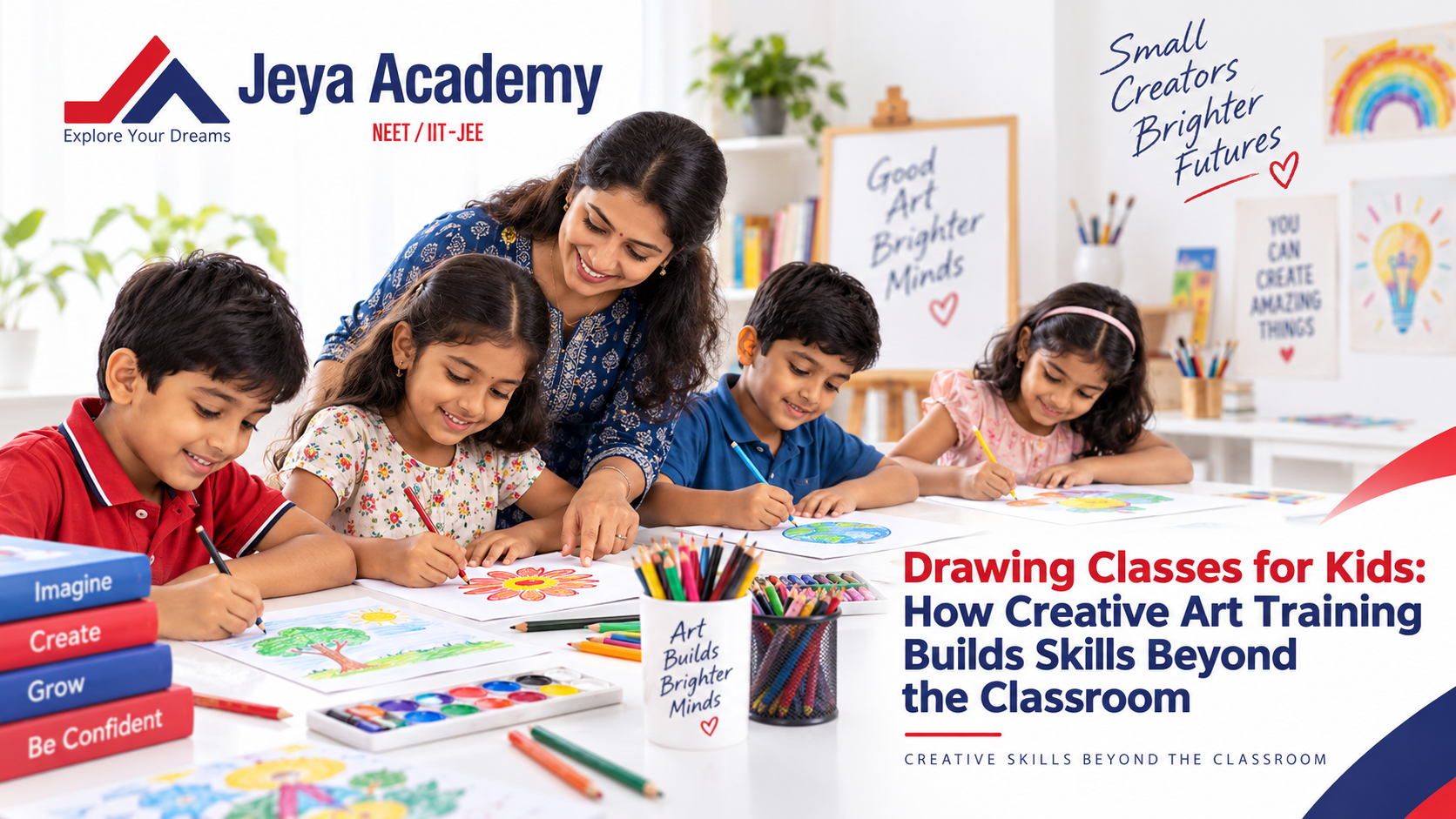
Drawing Classes for Kids: How Creative Art Training Builds Skills Beyond the Classroom
Every parent wants their child to excel—not just in school, but in life. We enroll them in tuition classes, sports coaching, and coding workshops, hoping to give them every possible advantage. But there’s one powerful learning experience that often gets overlooked: art. Specifically, structured drawing classes for kids.
At Jeya Academy in Tuticorin, we’ve watched hundreds of children walk through our doors—some shy, some restless, some convinced they “can’t draw.” And we’ve watched them transform. Not just into better artists, but into more confident, focused, and creative thinkers. Here’s why drawing classes matter far more than most parents realize.
What Really Happens When a Child Learns to Draw?
Most people think drawing is just a hobby—a pleasant way to pass time. But when a child sits down with a pencil and paper under proper guidance, something remarkable happens in their brain.
They start making decisions—hundreds of tiny ones.
Where should this line go? How big should this shape be? Why does this look wrong, and how do I fix it? This constant cycle of observing, deciding, and adjusting develops important thinking abilities related to planning, focus, decision-making, and problem-solving.
When your child learns to draw, they’re not just learning art. They’re developing valuable thinking and learning skills.
Five Skills Your Child Develops at the Drawing Table
1. Patience That Carries Into Every Subject
Let’s be honest—most children today struggle with patience. Instant gratification is everywhere. But drawing demands something different. You cannot rush a good sketch. You cannot skip steps and expect a beautiful result.
A child who spends forty minutes carefully shading a portrait is learning delayed gratification. They’re learning that effort comes before reward. This same patience can support them when solving long math problems, revising essays, and preparing for exams.
2. The Confidence to Make Mistakes
Here’s something beautiful about art: mistakes are fixable. A wrong line can become part of the design. A smudge can be blended into shadow. A “ruined” drawing can be started again.
In our drawing classes for kids, children learn that errors are not failures—they’re part of the process. This helps encourage resilience and gives children the confidence to try difficult things without being afraid of getting everything perfect the first time.
3. Observation Skills That Sharpen Everything
Drawing teaches children to truly see. Not just glance—but observe.
When a child draws a leaf, they notice the veins. When they draw a face, they study how light falls on different features. When they draw a building, they begin to understand angles and proportions. This habit of careful observation can support reading, science, creativity, and problem-solving.
4. Emotional Expression Without Words
Not every child can easily explain how they feel. But sometimes, they can express it through art.
Art gives children another way to communicate ideas and emotions. A colorful character may express joy, while a peaceful landscape can reflect calm. Creative activities give children space to explore their thoughts and imagination in a positive way.
5. Focus That Grows Stronger With Practice
In our experience at Jeya Academy, one of the changes parents often notice is improved concentration. Children who enjoy drawing may spend longer periods focusing on one activity without becoming distracted.
Drawing is naturally rewarding. As children improve, they often become more interested in continuing. This can help encourage focused attention that may also support reading, homework, and classroom learning.
Why Structured Classes Matter More Than Random Practice
Some parents wonder, “Can’t my child just draw at home?”
They can. But structured classes provide guidance and learning opportunities that are difficult to recreate through random practice alone.
Expert guidance: A trained instructor can identify where a child needs support and introduce techniques appropriate for their age and skill level.
Progressive curriculum: Random drawing is enjoyable, but structured learning allows children to build skills step by step. At Jeya Academy, lessons are designed to support steady improvement.
Healthy social environment: Drawing alongside peers can motivate children to learn, share ideas, appreciate each other’s work, and enjoy the creative process.
Constructive feedback: Encouraging and specific feedback helps children understand what they are doing well and what they can improve next.
The Long-Term Advantage
The benefits of drawing classes for kids don’t have to end when the class ends. Creative learning can continue influencing how children observe, think, communicate, and approach challenges as they grow.
A child who learns to draw may develop stronger visual communication, creative thinking, patience, and the confidence to explore new ideas.
In a world that increasingly values creativity and original thinking, these are useful abilities that can support children in many areas of life.
Start Your Child’s Creative Journey Today
At Jeya Academy, we’re passionate about helping children discover their potential through art. Our drawing classes for kids in Tuticorin are designed for different skill levels—whether your child is a beginner holding a pencil for the first time or a young artist ready to develop their technique further.
We focus on individual growth and create a supportive environment where children can explore, experiment, learn, and improve.
The skills your child develops at the drawing table can support them well beyond the canvas.
Help Your Child Discover Their Creative Potential
Contact Jeya Academy today to learn more about our drawing programs and enroll your child in a creative learning experience beyond the classroom.
Frequently Asked Questions
Q1: What is the right age to enroll my child in drawing classes?
Most children are ready for structured drawing instruction between ages 5 and 7. At this stage, they generally have enough fine motor control and attention span to follow basic guidance. However, every child develops differently. At Jeya Academy, children can be guided according to their individual skill level and learning needs.
Q2: My child says they “can’t draw.” Should I still enroll them?
Yes. Drawing is a skill that can improve through practice, guidance, and encouragement. Children who initially lack confidence can gradually become more comfortable as they learn basic techniques and see their own progress.
Q3: How long does it take to see improvement?
Progress varies from child to child. Some parents may notice improvements in confidence, patience, or willingness to try new drawings within a few weeks, while technical drawing skills usually develop gradually through regular practice.
Q4: What should we bring to the first class?
Basic supplies may include a sketchbook, graphite pencils such as HB, 2B and 4B, an eraser, and a sharpener. The Jeya Academy team can provide guidance on any additional materials required for your child’s program.
Q5: Will drawing classes affect my child’s academic studies negatively?
Drawing classes can be balanced alongside regular studies. Creative activities can help children practice concentration, patience, observation, and time management, which may also support their overall learning habits.
Q6: Do you offer classes for teenagers as well?
Yes. Jeya Academy offers learning opportunities for different age groups, including teenagers who want to develop their drawing skills further or explore art related to design and architecture.