


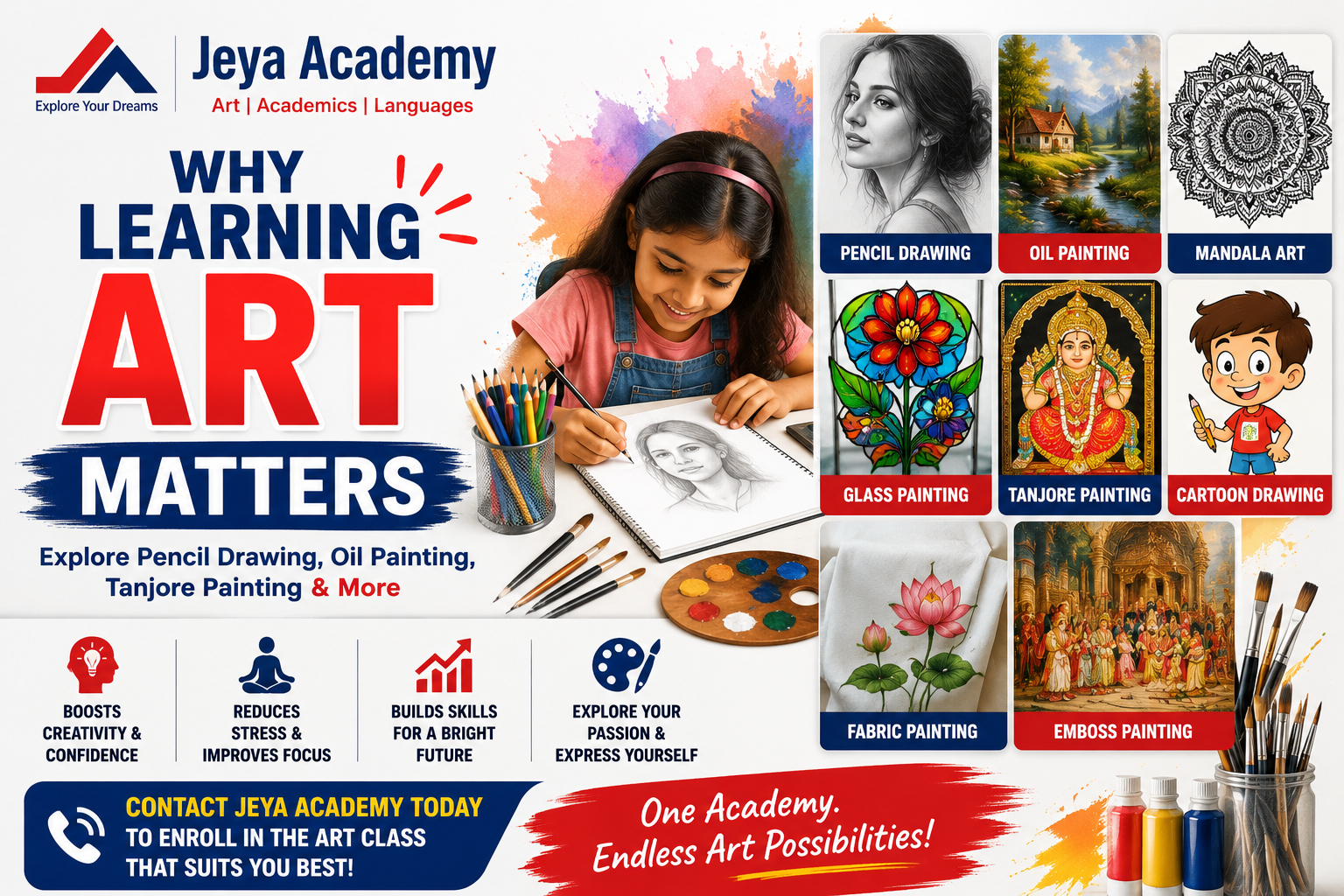
Why Learning Art Matters: Explore Pencil Drawing, Oil Painting, Tanjore Painting & More at Jeya Academy
Art is not just a hobby — it is a language of expression, a stress reliever, and for many, the beginning of a rewarding career. Whether you’re a student looking to build a creative skill, a working professional wanting to unwind, or a parent searching for the right art classes for your child, understanding the importance of different art forms can help you choose the right path. At Jeya Academy, a wide range of drawing and painting courses are available under one roof, making it easier than ever to start your artistic journey.
In this blog, we explore why each of these art forms matters and how learning them can benefit you.
1. Pencil Drawing — The Foundation of All Art
Every great artist starts with pencil drawing. It builds the fundamentals of shading, proportion, perspective, and observation that are essential for every other art form. Learning pencil drawing sharpens hand-eye coordination and trains the mind to see details others might miss. It is often the first step recommended before moving on to painting or advanced art techniques.
Why it’s important: Builds core artistic skills, improves focus, and forms the base for portraits, sketches, and illustrations.
2. Oil Painting — Timeless and Expressive
Oil painting is one of the oldest and most respected painting techniques in the art world. Its rich texture, blending capability, and long-lasting finish make it a favourite among serious artists. Learning oil painting teaches patience, color theory, and layering techniques that are valuable across all forms of visual art.
Why it’s important: Enhances understanding of color mixing and texture, and opens doors to fine art and gallery-level work.
3. Mandala Art — Mindfulness Through Pattern
Mandala art combines geometry, symmetry, and creativity into intricate circular designs. Beyond its visual appeal, practicing mandala art is known to reduce stress and improve concentration, making it popular as a meditative and therapeutic art form.
Why it’s important: Improves focus and patience while offering a calming, meditative creative outlet.
4. Glass Painting — Creativity with a Modern Touch
Glass painting is a decorative art form used to create vibrant, translucent designs on glass surfaces — perfect for home décor, gifting, and small business opportunities like custom glass art products. It’s a fun, accessible art form for beginners and a great way to explore color vibrancy.
Why it’s important: Combines creativity with practical, sellable craft skills and home décor applications.
5. Tanjore Painting — Preserving Cultural Heritage
Tanjore painting is a classical South Indian art form known for its rich colors, gold foil work, and religious themes. Learning this traditional art not only develops fine painting skills but also helps preserve an important part of India’s cultural heritage.
Why it’s important: Connects learners to traditional Indian art, develops precision, and creates opportunities in the heritage art and gifting market.
6. Cartoon Drawing — Fun-Filled Creative Expression
Cartoon drawing is one of the most engaging art forms, especially for kids and young learners. It encourages imagination, storytelling, and character creation while keeping the learning process light and enjoyable.
Why it’s important: Builds imagination and storytelling skills, and is a great entry point for young artists into the world of animation and illustration.
7. Fabric Painting — Turning Textiles into Art
Fabric painting allows artists to transform plain cloth, sarees, and dress materials into personalized art pieces. It’s a highly practical skill with real income potential, especially for those interested in boutique work or home-based businesses.
Why it’s important: Offers a creative and commercially valuable skill, ideal for boutique and small-business opportunities.
8. Embassy Painting — Detailed and Historic Art Style
Embassy painting, known for its detailed and grand compositions, helps learners develop advanced painting skills including depth, lighting, and complex scene composition. It challenges artists to think beyond simple designs and work on storytelling through detailed visuals.
Why it’s important: Develops advanced composition and lighting skills for artists aiming to master detailed, large-scale artwork.
Why Choose Jeya Academy for Art Classes?
Jeya Academy brings together all these art forms — Pencil Drawing, Oil Painting, Mandala Art, Glass Painting, Tanjore Painting, Cartoon Drawing, Fabric Painting, and Embossed Painting — under one platform, guided by experienced trainers. Whether you’re a beginner or looking to specialize, Jeya Academy’s structured courses make it easy to learn at your own pace.
Along with art, Jeya Academy also offers training in academics, tuition, and languages, making it a complete learning destination for students and professionals alike.
Ready to Begin Your Art Journey?
Explore all the drawing and painting courses available at Jeya Academy and take the first step toward mastering a skill that lasts a lifetime. Contact Jeya Academy today to enroll in the art class that suits you best.